
 Cat Saettel
1 min read
Be the Hero in Your Patient Experience
 Kenna Goodrich : November 10, 2021
Last updated August 12, 2026 by Cat Saettel Do you want your patients to have the best experience possible at your unique healthcare facility or...
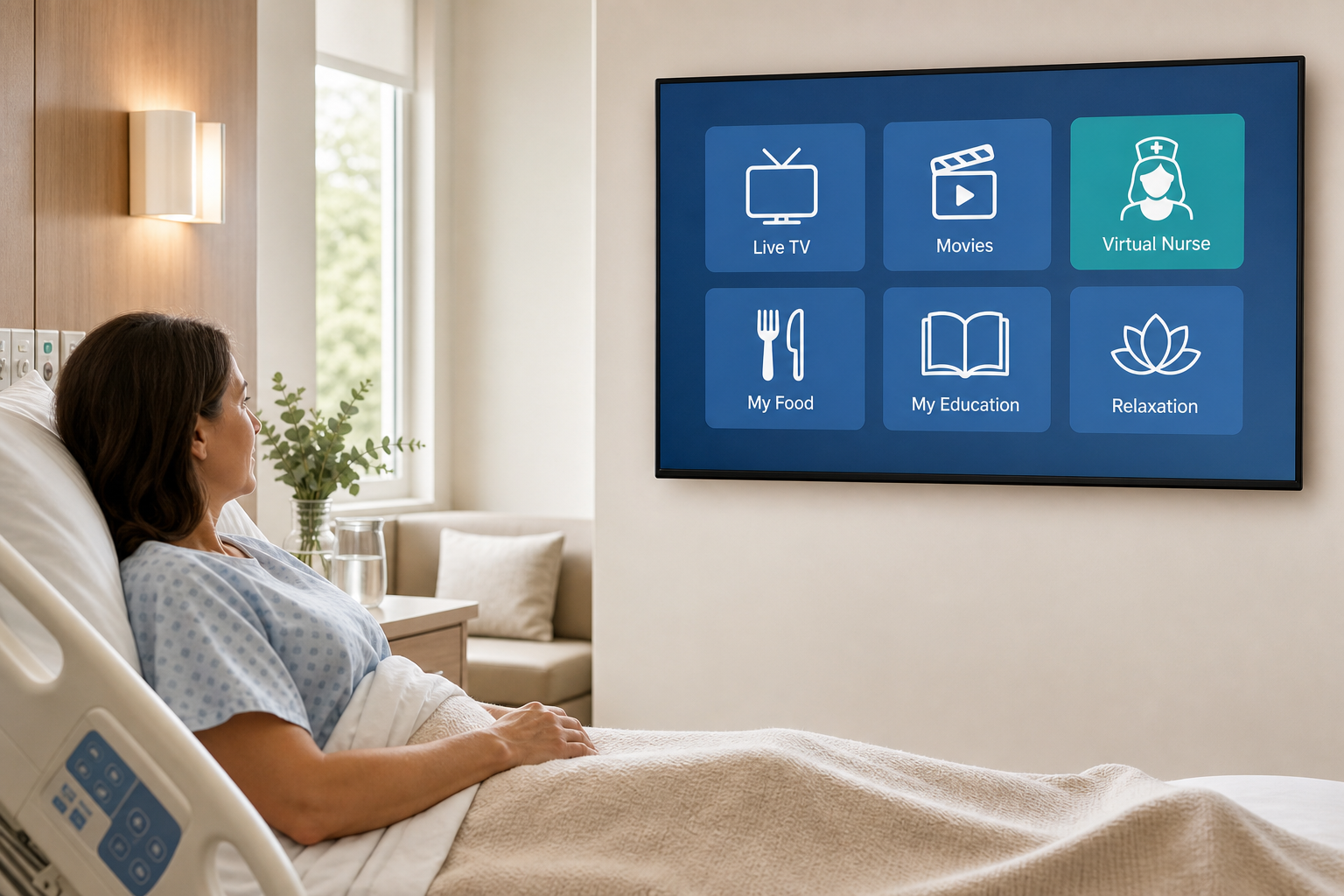
Hospital staff often face the difficult task of managing hundreds or thousands of patient engagement devices, including televisions, digital displays, and tablets. This challenge becomes even more complex when teams must juggle multiple device brands from different vendors.
Adding different patient engagement devices, separate vendors, and third-party middleware can cause operational, maintenance, and security problems. Integrating these endpoints into an all-in-one hospital TV solution can reduce the total cost of ownership, simplify operations across multi-campuses, and standardize deployments at scale.
PDi Communication Systems, Inc., offers this unified ecosystem through its smart hospital TV system +
GENiOTM device management tool.

According to a 2020 peer-reviewed Nurse Leader study, communication platforms in healthcare settings have become such disparate systems that some healthcare providers get confused and frustrated.
Having to procure different solutions from separate vendors means needing to manage separate contracts, different pricing models, and different subscription terms. Your team may also need more training because they must learn multiple systems, management consoles, and support processes.
Additionally, multiple endpoints per patient room equal more points of failure, more firmware updates, and more support tickets. Each system must be set up and configured separately, which requires more time and effort.
IT teams also must switch between systems and double-check for data synchronization and system compatibility. This hinders productivity, increases the risk of error, and can create a fragmented user experience.
Other possible issues with the multi-vendor middleware approach include:
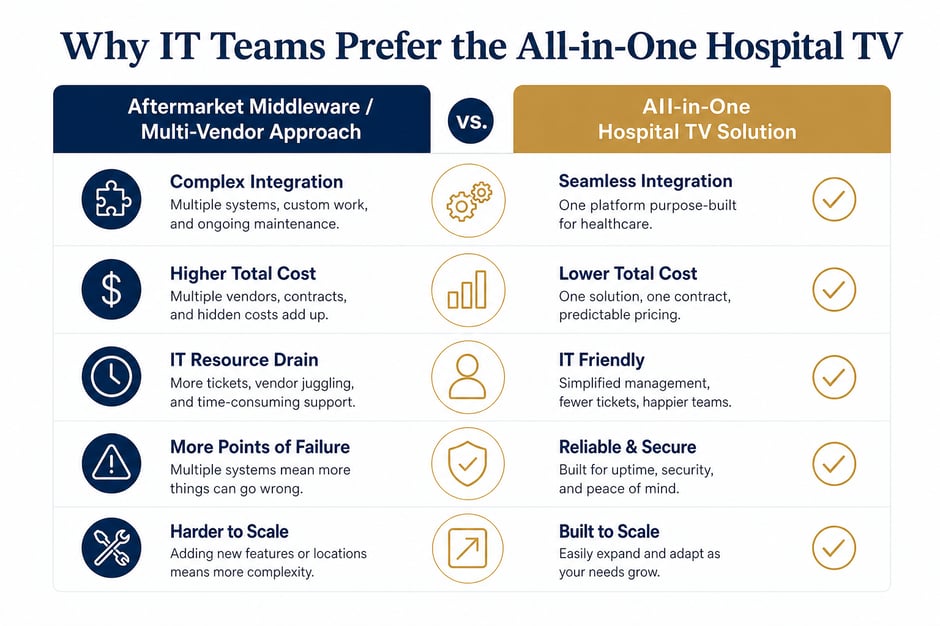
A 2025 Forbes article shares that, “the debate between all-in-one solutions and [multi-vendor systems] isn’t just a question of preference — it’s a strategic decision that shapes scalability, efficiency and ROI.”
The all-in-one approach works because the hardware, software, and device management are integrated from the factory. Native tools talk to each other seamlessly, which eliminates compatibility issues. Instead of managing separate systems, your facility gets one endpoint, one MDM, and one connected platform designed for patient engagement, entertainment, and enterprise fleet control. This translates into a simple, flexible, and scalable smart room solution.
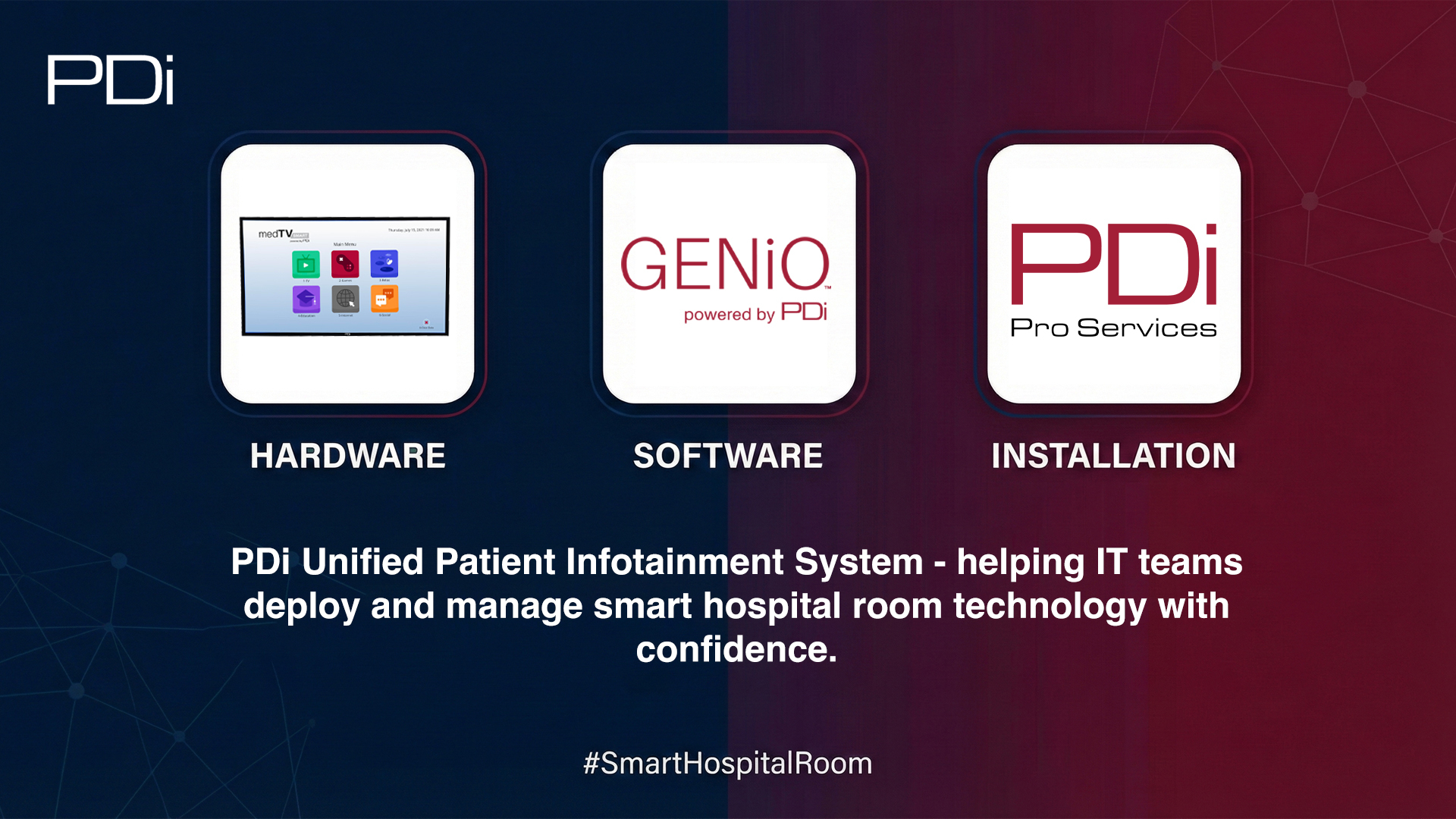
We provide a unified patient infotainment system that includes UL listed A-Series TVs, an enterprise cloud device management tool, and guaranteed project installation services. This 360-degree ecosystem allows healthcare teams to seamlessly update firmware, push apps, customize content, and manage devices across the entire hospital TV fleet from one dashboard. GENiO also supports Epic’s MyChart Bedside TV, which provides interactive entertainment and health information to patients.
A 2024 Deloitte healthcare study estimates that it’s possible to free up to 50% of time for revenue cycle professionals and up to 20% for bedside nurses with the right technologies. This extra time can allow revenue cycle professionals to build more strategic relationships, while nurses can focus more on providing direct patient care.
Having an all-in-one hospital TV system can help achieve this efficiency as it reduces hardware installation and setup configuration. Also, when something goes wrong, there’s one vendor to call and one system to troubleshoot, allowing for faster deployment.
The benefits of GENiO + PDi smart room solutions versus mixed brands are clear:

|
Category |
Multi-Vendor Middleware Approach |
PDi All-in-One Hospital TV Solution |
|
Device management |
Another device, another vendor, another management layer |
One cloud-based device management platform |
|
Procurement |
Separate contracts, quotes, and renewal terms |
One provider for hardware, software, and support |
|
IT workload |
More setup, configuration, updates, and troubleshooting |
Streamlined setup and fleet management |
|
Security and compliance |
Different update processes, access controls, and app compatibility requirements |
More consistent device management and access control |
|
Support |
Potential finger-pointing across vendors |
One vendor to call |
|
Scalability |
Harder to standardize across facilities |
Easier to deploy and manage across locations |
|
Cost |
More risk of add-ons, overlapping fees, and billing complexity |
Clearer total cost of ownership |
GENiO is PDi’s cloud-based device management tool. It allows healthcare teams to remotely manage both TV and OS system functionality, monitor devices, push updates, update settings, and scale TV deployments efficiently. GENiO also deploys MyChart Bedside TV on PDi displays.
Yes. The PDi A-Series Smart Hospital TV system is available as “Bedside TV Hardware” on Epic Showroom. This all-in-one AndroidTM-based TV with GENiO deploys MyChart Bedside TV, provides easy pillow speaker control, and streamlines RF, IPTV, and streaming entertainment.
Yes. For hospitals already using PDi-built K-Series or medVUE displays, the PDi TV BOX provides a retrofit path to add GENiO-powered smartroom capabilities. This single vendor approach allows facilities to add Epic MyChart Bedside TV. Still, for new deployments, the PDi all-in-one hospital TV solution remains the more cost-effective solution.
PDi’s all-in-one smart TV solution means you don’t need to integrate different devices from different vendors. This reduces the true total cost of ownership and eliminates the complexity of a multi-vendor approach.


1 min read
Kenna Goodrich : November 10, 2021
Last updated August 12, 2026 by Cat Saettel Do you want your patients to have the best experience possible at your unique healthcare facility or...
1 min read
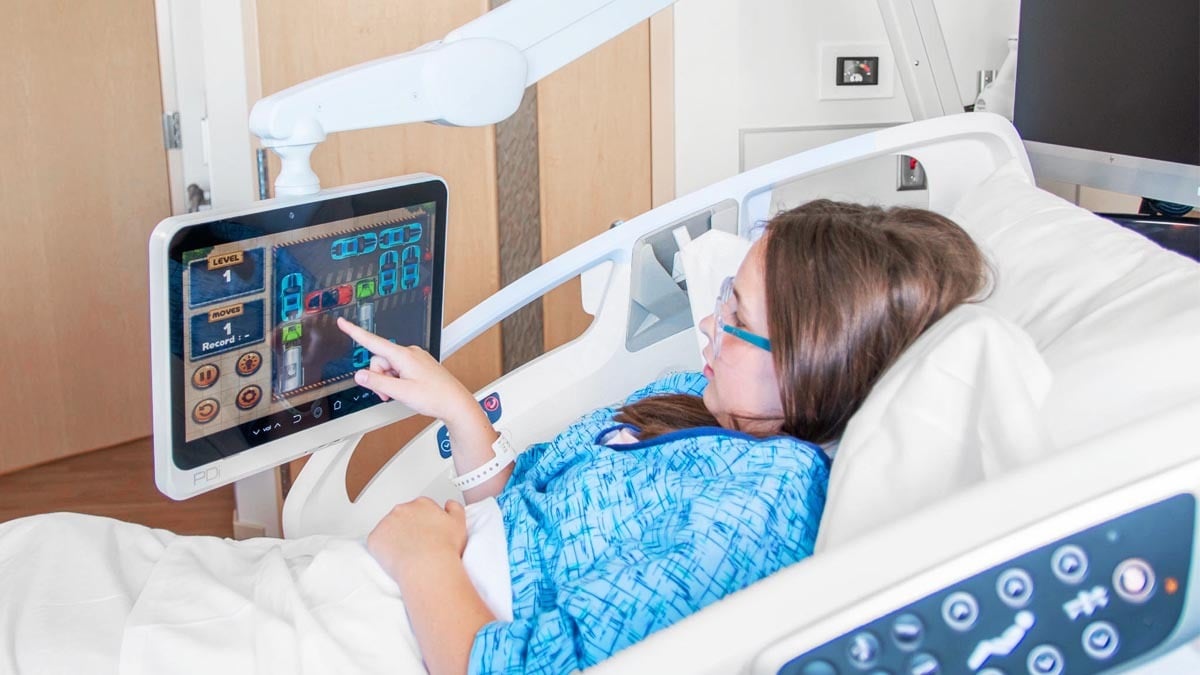
Have you ever used a personal arm-mounted TV in a healthcare setting, like a dialysis clinic or rehabilitation hospital center? If you have, you...

1 min read
 Cat Saettel : September 8, 2026
For years, hospital purchasing decisions treated patient-room technology, such as televisions, swinging arm mounts, and interactive touchscreens, as...
